Homeowner education
Understand the fire. Then beat it on paper.
Everything on this page exists so you can make decisions like an expert: how homes really ignite, what the state requires and owes you, what the work costs to fund, and the rhythm of keeping a home defensible year after year.
Nonrenewed or declined?
Your appeal starts with evidence.
Stuck on the FAIR Plan?
The playbook for the way back.
Chasing the discounts?
Every measure and what it earns.
Want the field view?
Real findings from real assessments.
Part one
How homes actually ignite
The picture in most people's heads, a wall of flame arriving at the house, is not how most homes are lost. Research from post-fire investigations points the same direction again and again: the large majority of destroyed homes are ignited by embers, burning fragments carried on the wind, sometimes a mile or more ahead of the fire itself.
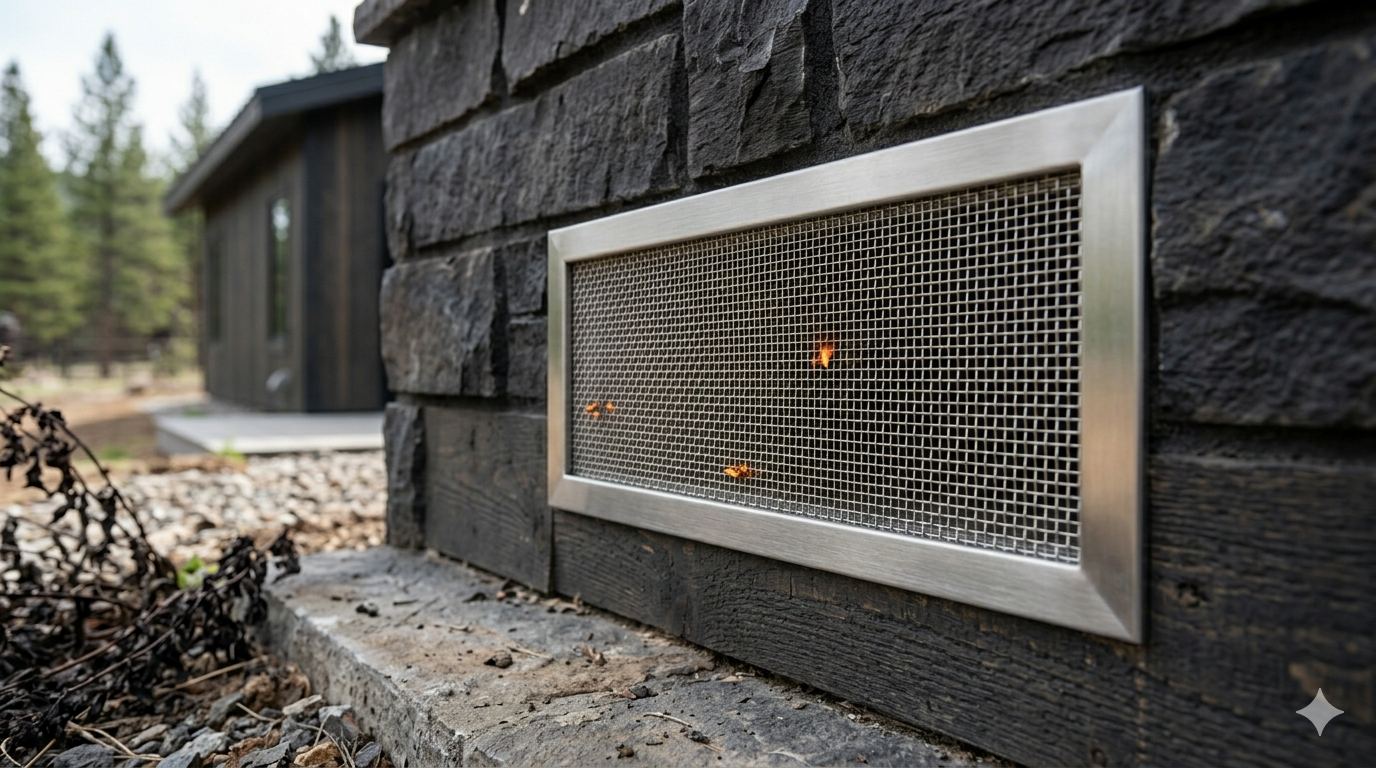
Embers work like a swarm of tiny arsonists checking every weakness at once. They land in gutters full of needles, slip through coarse vent screens into attics and crawlspaces, lodge under decks against stored fuel, and settle into bark mulch against the siding. A home survives or ignites based on hundreds of small details, which is why hardening is a checklist discipline, not a single purchase.
This is also the good news. You cannot stop a fire front, but you can close ember pathways one by one, and the state has written the list into regulation. Every item on your WUI Clear record exists because it closes one.
Part two
The zones, from your walls outward
California organizes defensible space in rings. Zone 0 (0 to 5 feet) is the ember-resistant zone where nothing combustible belongs. Zone 1 (5 to 30 feet) is lean, clean, and green. Zone 2 (30 to 100 feet) is reduced fuel. State law (PRC 4291) requires the full 100 feet where your land allows it, and the work is inspected in many counties. The structure itself, roof, vents, eaves, windows, deck, is the innermost ring of all.
See every measure with real field examples →Part three
Your rights in California
Carriers must credit verified mitigation
Under Insurance Code §2644.9 and the Safer from Wildfires framework, admitted carriers must recognize the listed mitigation measures in their wildfire risk pricing, and must tell you your property's wildfire risk determination with a way to appeal it.
Nonrenewal is not always final
Regulators increasingly expect specific reasons for wildfire nonrenewals and, in many cases, a chance to fix the conditions cited. Evidence decides these processes.
The FAIR Plan owes you discounts too
California's insurer of last resort publishes its own hardening discounts. Claiming them requires documentation, which most policyholders never assemble.
Disclosure follows the home
Under AB 38, selling a home in a high hazard zone comes with hardening disclosure requirements. A maintained compliance record turns that obligation into a selling point, and your WUI Clear record transfers with the property.
Part four
Paying for the work
Hardening is an investment, and you rarely have to carry it alone. California runs a state financial assistance program for wildfire mitigation that is expanding county by county, many counties and Fire Safe Councils offer defensible space grants and free chipping days, some utilities run vegetation and retrofit rebates, and communities with recognized Firewise status can unlock further insurance consideration. Availability changes constantly, which is why WUI Clear surfaces applicable programs during your project's bidding phase, matched to your county, rather than leaving you a list of expired links. And the discounts themselves are part of the math: work that earns premium reductions pays some of its own cost back every year.
Part five
The defensible year
Hardening is not a one-time event. Homes drift out of compliance one windstorm and one growing season at a time. This is the rhythm that keeps a record current:
Prune and limb trees while dormant. Plan structural projects so contractors finish before fire season. Book your assessment: spring slots fill fast.
Mow annual grasses before they cure. Clear roof and gutters after the last storms. Complete defensible space work ahead of inspection season.
Final Zone 0 sweep: no mulch, no stored items, nothing combustible in the first five feet. Verify vents and screens are intact after winter.
Maintenance mode: keep grass at four inches, roof and gutters clean, and combustible furniture away from the structure on red flag days.
Walk the property while problems are visible: clogged gutters, damaged screens, winter storm limbs. File photos to your record.
Part six
Speak the language
Wildland urban interface: where homes meet vegetated land. Most California structure loss happens here.
Fire Hazard Severity Zone, the state's official hazard mapping. Moderate, High, or Very High. Your zone affects codes, disclosures, and how insurers see you.
The first five feet around a structure. The ember-resistant zone: nothing combustible, period.
Certified Wildfire Mitigation Specialist, the NFPA credential held by the assessors on this platform. A few hundred exist nationwide.
The highest fire rating for roof coverings: composition shingle, metal, tile.
California's insurance framework listing the mitigation measures admitted carriers must credit under Insurance Code §2644.9.
California's insurer of last resort. Basic coverage, high cost, and its own published hardening discounts.
The managed vegetation zones around a structure required by state law (PRC 4291) out to 100 feet.
State law requiring wildfire hardening disclosure and, in many areas, defensible space compliance documentation when a home in a high hazard zone is sold.
Ready to see your own property clearly?
Start with the free ClearScan, or go straight to the assessment that opens your compliance record.